The Squid That Changed Everything: How Nagasaki's Ancient Fishing Grounds Are Landing on America's Finest Menus
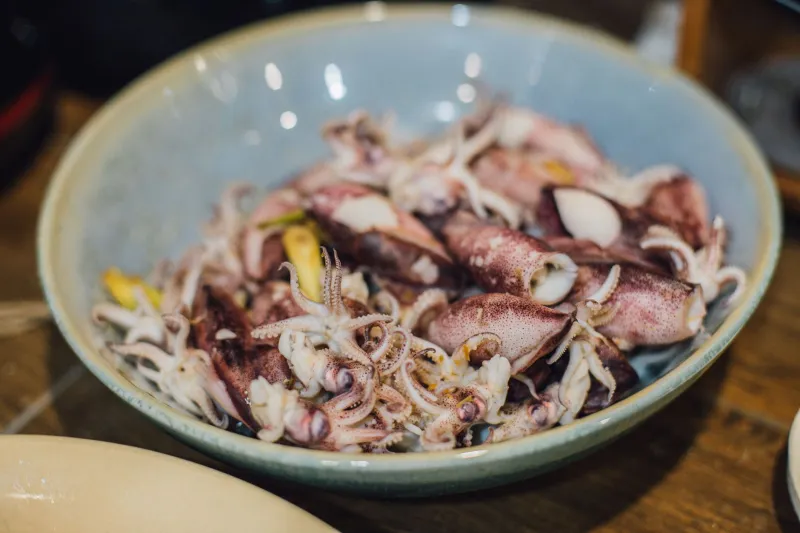
Walk into almost any American sports bar and you'll find calamari on the menu—golden, battered rings served with a side of marinara. It's dependable, it's popular, and honestly, it's pretty good. But ask a chef who's cooked with squid sourced from Nagasaki Prefecture, and they'll tell you that comparison barely makes sense. What comes out of those cold Japanese waters is something different altogether—cleaner, sweeter, and so tender it practically dissolves.
Nagasaki has been one of Japan's most important fishing regions for centuries, and squid—known locally as ika—sits at the very heart of that identity. The prefecture consistently ranks among Japan's top squid-producing areas, and in the port city of Sasebo and along the Goto Islands, the fishing culture surrounding squid runs generationally deep. But in recent years, that regional pride has started crossing the Pacific, quietly reshaping how a small but influential slice of American culinary culture thinks about this underrated seafood.
What Makes Nagasaki Squid Different
It starts with geography. The waters surrounding Nagasaki Prefecture benefit from the confluence of the Tsushima Warm Current and colder deep-sea upwellings, creating a nutrient-dense environment that feeds squid exceptionally well. The result is a product with noticeably higher fat content in the mantle, a natural sweetness that doesn't require a heavy marinade to coax out, and a texture that holds up beautifully whether you're serving it raw, grilled over binchotan, or barely simmered in a light dashi.
The dominant species harvested here is Todarodes pacificus, the Japanese flying squid, though smaller varieties like Sepioteuthis lessoniana—often called bigfin reef squid—are prized for their particularly delicate flesh. Both are handled with a care that begins the moment they're brought aboard the boat. Many Nagasaki fishing operations practice ikejime-style dispatch techniques, rapidly neutralizing the squid to prevent stress-induced texture degradation. The difference between a squid handled this way and one that died slowly in a net is something you can actually taste.
"The first time I broke down a Nagasaki squid, I thought something was wrong," says Marcus Delray, executive chef at a Japanese-influenced restaurant in San Francisco's Hayes Valley neighborhood. "It was so clean. No fishiness, almost a faint sweetness. I kept it super simple—thin sliced, a little sea salt, a drop of yuzu—and it was one of the best things on the menu that week."
The Sustainable Angle American Importers Are Selling
For US importers, the quality argument is compelling on its own. But there's another layer to the Nagasaki squid story that resonates strongly with American buyers increasingly focused on supply chain ethics: sustainability.
Nagasaki's squid fisheries operate under a framework of seasonal restrictions and catch limits set by Japan's Fisheries Agency, and many local cooperative organizations layer additional voluntary conservation measures on top of those regulations. Some fishing communities in the Goto Islands, for example, have adopted rotational fishing zones that allow squid populations to replenish in sections of their traditional grounds. It's not a marketing gimmick—it's a practice rooted in the practical reality that these fishing families depend on healthy stocks for their livelihoods across generations.
"When I'm sourcing something like this for a premium restaurant account, I need to be able to tell the whole story," explains Jennifer Okafor, a Seattle-based seafood importer who began carrying Nagasaki squid about three years ago. "Chefs want to know where it's from, how it was caught, how it was handled. Nagasaki checks every box. And the product just speaks for itself once someone actually tastes it."
Okafor notes that demand from Pacific Northwest and California restaurants has grown steadily, with interest now spreading to culinary hotspots in New York and Chicago. The squid typically arrives fresh-frozen using individual quick-freeze (IQF) technology that preserves cellular integrity far better than conventional freezing methods, allowing stateside chefs to work with a product that performs almost identically to fresh.
Why American Chefs Are Paying Premium Prices
Nagasaki squid doesn't come cheap by American standards. Depending on the season and species, wholesale prices can run two to four times what a chef might pay for conventional squid sourced from domestic or South American fisheries. So why are restaurants absorbing that cost?
Part of the answer is the premium dining market's ongoing obsession with provenance. In a culinary landscape where menus routinely cite the specific farm a carrot came from, naming a specific Japanese prefecture for your squid is exactly the kind of specificity that resonates with food-literate diners willing to spend accordingly.
But the more honest answer, according to the chefs we spoke with, is simpler: it's just better, and it shows on the plate.
"I've done blind tastings with my kitchen team," says Priya Nambiar, chef-owner of an omakase counter in Austin, Texas. "Every single time, the Nagasaki squid wins. The texture is more refined, the flavor is cleaner. You don't have to fight it or mask it. That makes my job easier and the dish better."
Nambiar serves a preparation inspired by Nagasaki's traditional ika somen dish—squid cut into thin noodle-like strips and served chilled with a delicate dipping sauce—and says the dish has become one of her counter's most-requested items. "People who've never thought twice about squid come back asking for it specifically. That's the power of a great ingredient."
The Tradition Behind the Trend
It would be easy to frame all of this as a trendy import story, but that framing misses something important. In Nagasaki, squid fishing isn't a boutique operation—it's a way of life that predates modern culinary trends by several hundred years. Fishing families along the Goto Islands and around Hirado have passed down techniques for reading squid migration patterns, rigging traditional sutte lures, and processing the catch with minimal waste across many generations.
That accumulated knowledge is embedded in the product itself. When an American chef opens a package of Nagasaki squid, they're the beneficiary of centuries of refinement—not just in fishing technique, but in the understanding of what quality actually looks and feels like at every step of the chain.
At Nagasaki Sakana, that's exactly the kind of story we think deserves to be told. Squid might be one of the most overlooked proteins in the American kitchen, but what's coming out of Nagasaki's waters is making a compelling case for a serious reassessment. The chefs have already noticed. The question is whether home cooks will follow.
Spoiler: once you taste the difference, there's no going back.