Inside Japan's Wildest Morning Ritual: A Couch Traveler's Guide to Nagasaki's Fish Auctions
It's 4 a.m. in Nagasaki. The harbor smells like salt and diesel. Fluorescent lights blast over rows of blue plastic tubs packed with fish that were swimming in the East China Sea just hours ago. Auctioneers chant in a rapid-fire shorthand that sounds almost musical, and buyers — many of whom have been doing this for thirty years — signal bids with subtle hand gestures that an outsider would completely miss.
You don't need a plane ticket to experience this. Grab a coffee, settle in, and let us walk you through one of Japan's most extraordinary food traditions: the Nagasaki fish auction.
Why Nagasaki's Markets Hit Different
Nagasaki isn't just historically significant for its role in Japan's contact with the outside world — it's also one of the country's most productive fishing prefectures. The waters off Kyushu's western coast sit at the confluence of the Tsushima Warm Current and colder continental shelf waters, creating a nutrient-rich environment that supports an almost absurd variety of marine life.
The region's two major wholesale markets — Nagasaki City's central fish market near the port, and the bustling Hirado wholesale hub further north — collectively handle thousands of tons of seafood annually. These aren't tourist attractions. They're working infrastructure for a fishing economy that stretches back centuries, and they operate with an efficiency that would make a logistics consultant weep with joy.
The Pre-Dawn Choreography
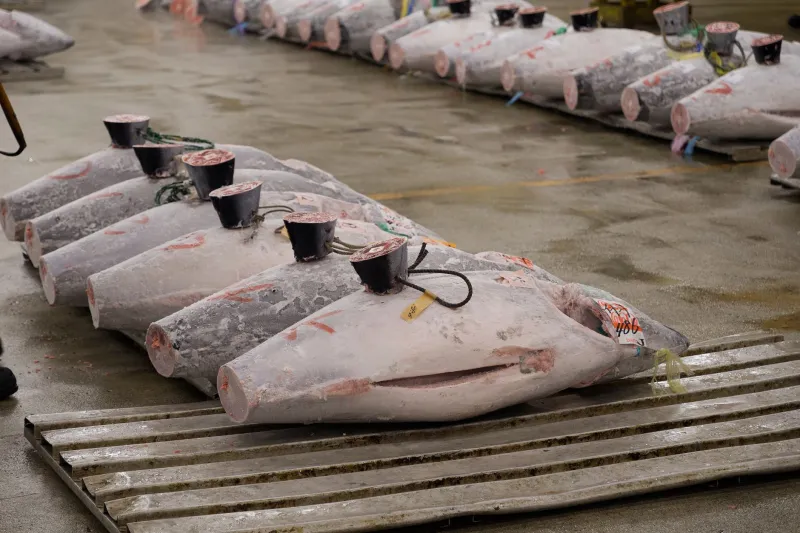
Boats begin unloading as early as 2 or 3 a.m. By the time the auction officially kicks off — usually around 5 a.m. — the floor is already arranged with military precision. Fish are sorted by species, then graded by size and quality, and finally laid out in lots that buyers will assess in a matter of seconds.
Here's where it gets interesting for the seafood-curious American: the grading process is almost entirely visual and tactile. Experienced buyers press the flesh near the gills, examine the clarity of the eyes, check the brightness of the skin, and even smell the belly cavity. No apps, no sensors — just decades of accumulated knowledge.
Local fishmonger Kenji Yamamoto, who has worked the Nagasaki market floor for over two decades, described it simply in a recent interview: "The fish tells you everything. You just have to know how to listen." He's not being poetic. He means it literally. A dull eye, a soft belly, a faint ammonia hint — these are disqualifying signals that send a lot to a lower price tier instantly.
The Stars of the Show: What Gets the Crowd Going
Not all fish are created equal on the Nagasaki auction floor. Here are the species that draw the most competitive bidding — and the ones most likely to eventually reach American consumers.
Aji (Japanese Horse Mackerel) — This is Nagasaki's signature fish, full stop. The prefecture is nationally famous for its aji, and premium specimens from the Goto Islands fetch prices that would raise eyebrows. When you see "seki aji" on a Japanese restaurant menu in the US, you're looking at one of the most coveted regional fish designations in the country.
Tai (Red Sea Bream) — Culturally loaded with meaning in Japan (it's considered auspicious, served at celebrations), tai from Nagasaki waters is prized for its clean, slightly sweet flavor. High-grade tai frequently gets snapped up by Tokyo's top sushi restaurants before it even has a chance to leave the prefecture.
Fugu (Pufferfish) — Yes, that fugu. Nagasaki is one of Japan's leading fugu-producing regions, and watching the auction process for this species is something else entirely. Licensed buyers only, separate handling areas, and prices that reflect both the delicacy and the regulatory complexity involved.
Hairtail (Tachiuo) — A long, silver, ribbon-like fish that's wildly popular in Kyushu but still somewhat underappreciated in the American market. Its rich, buttery flesh makes it a grilling dream, and it's starting to show up at more adventurous fish counters stateside.
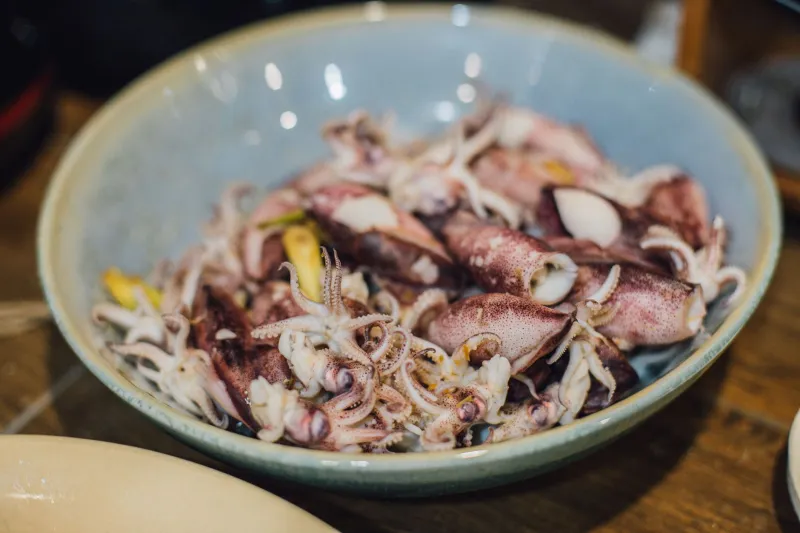
Squid (Ika) — Nagasaki's squid fishing legacy is deep and ongoing. Live squid, processed squid, dried squid — all of it moves through these markets in enormous quantities, and a growing share is finding its way into American wholesale channels.
How to Watch (Without a Visa)
Several Japanese public broadcasters and regional tourism boards have produced documentary-style market walkthroughs that are genuinely worth your time. NHK World has aired segments on Japanese fish markets that offer real floor access, and YouTube hosts a scattered but rewarding collection of videos filmed by visiting food journalists and culinary tourists.
Nagasaki Prefecture's own tourism content — some of it subtitled in English — occasionally features market footage, particularly around the fall yellowtail season when the visual drama is at its peak. Searching for "長崎魚市場" (Nagasaki fish market) on YouTube with auto-translate enabled is a surprisingly effective rabbit hole.
So How Does This End Up On Your Plate?
The journey from Nagasaki's auction floor to an American dinner table is longer and more complex than most people realize, but it's genuinely happening. A combination of improved cold-chain logistics, growing US consumer interest in Japanese fish species, and the expansion of Japanese-owned seafood import companies has made Nagasaki-sourced product more accessible than ever.
At the retail level, your best bet is Japanese grocery stores — Mitsuwa and Marukai locations across the country often carry imported Japanese fish or domestic product processed to Japanese standards. High-end fish counters at places like Eataly or specialty fishmongers in coastal cities increasingly stock species that travel the same supply chains originating in Kyushu.
When you're at the counter, ask questions. Where is this from? How was it caught? Is it line-caught or net-caught? A good fishmonger will know — and if they don't, that's useful information too.
The Thing About Watching an Auction
There's something that happens when you watch experienced professionals move through a fish market at full speed. It recalibrates how you think about the food on your plate. That piece of mackerel at your local Japanese restaurant wasn't just "caught and shipped." It passed through the hands of a fisherman who knew exactly where to find it, an auctioneer who called its value in seconds, and a buyer who staked their reputation on the quality assessment they made before sunrise.
Nagasaki's fish markets are a reminder that great seafood is never accidental. It's the product of geography, tradition, expertise, and an almost obsessive attention to freshness that starts the moment the net hits the deck.
You might not be able to smell the salt air or hear the auctioneer's chant from your living room. But understanding what's happening on that floor — even from a distance — changes how you eat. And that's worth the virtual trip every time.