The Best Seafood Deal in America Is Hiding in Plain Sight — And It's from Nagasaki
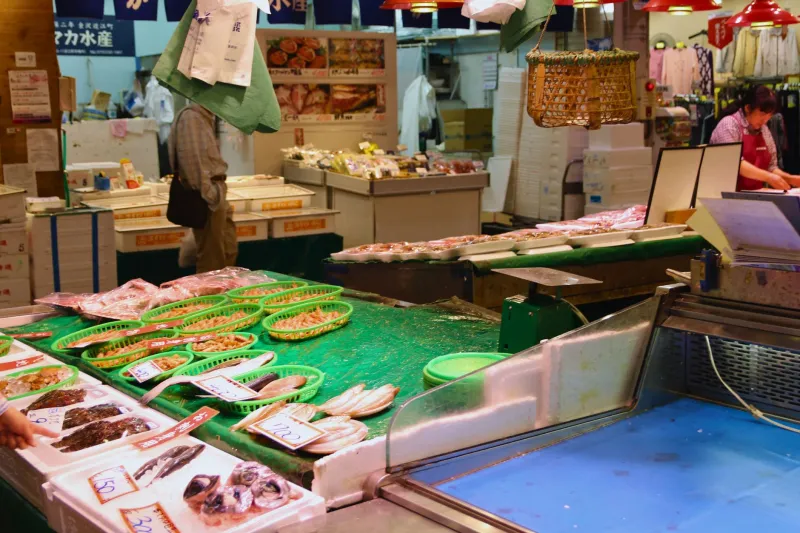
Here's something that doesn't quite add up: walk into a well-stocked American fish market and you'll pay $28 a pound for Atlantic halibut without blinking. But a beautifully marbled kinmedai — golden eye snapper pulled from the deep, cold waters off Nagasaki's Goto Islands — might be sitting in the same case for $14 a pound, if it's there at all. Same quality tier. Completely different price tag.
So what's going on?
The answer involves shipping logistics, decades of consumer habit, and a seafood culture that's only just beginning to crack open in the United States. And if you're a home cook willing to look past the salmon-and-tuna reflex, it represents one of the most underrated grocery wins available right now.
The Price Gap Nobody's Talking About
When Marcus Leland, a seafood importer based in Los Angeles who specializes in Japanese product, started bringing in Nagasaki-sourced fish about six years ago, he expected some resistance. What he didn't expect was the pricing paradox that followed.
"We were landing fish that, by any objective culinary standard, rivaled what high-end restaurants were paying a fortune for on the Atlantic side," he says. "But because American buyers didn't recognize the species name, we couldn't charge what the product was worth. So we sold it cheaper just to move it."
That dynamic — quality product underpriced because of name recognition — is still very much alive. Japanese varieties like sablefish (which does have some US market presence), Nagasaki-caught amadai (tilefish), and the extraordinary hirame (Japanese flounder) all tend to land at retail well below their Atlantic equivalents, despite comparable or superior fat content, texture, and flavor profiles.
Part of this is pure supply chain math. Importing fish from Kyushu involves cold-chain logistics that add cost but also reflect a Japanese handling standard — ikejime killing technique, rapid chilling, meticulous packing — that actually preserves quality better than most domestic processing. The irony is that better handling should command a premium. Instead, the unfamiliarity tax runs in reverse.
What Chefs Already Know
In restaurant kitchens, the calculation looks different. Chefs who've been sourcing Nagasaki product for years treat the price gap as a competitive advantage — and they're not eager to advertise it.
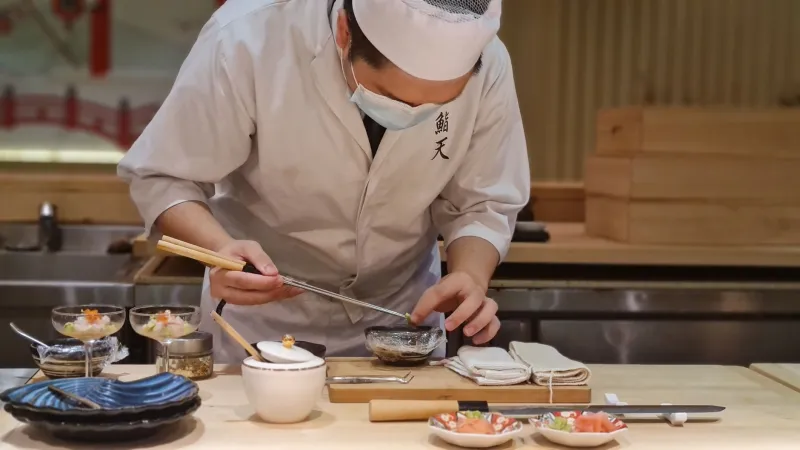
Chef Yuki Haramoto, who runs an omakase counter in San Francisco, has been building relationships with Nagasaki importers since before it was fashionable. "My food cost on certain Japanese white fish is dramatically lower than what my competitors pay for Dover sole or Pacific halibut," she says. "And my guests are getting something genuinely rarer and more interesting. It's not a compromise — it's an upgrade."
Haramoto points to Nagasaki's nodoguro — blackthroat seaperch — as a prime example. In Japan, it's considered one of the most prized white fish available, served at kaiseki restaurants that charge hundreds of dollars a seat. In the US, it occasionally surfaces at Japanese specialty importers for prices that would make a European turbot look extravagant by comparison. "People see the name, they don't know it, and they reach for the salmon instead," she says. "That's their loss."
The Consumer Perception Problem
American seafood culture has deep grooves worn into it. Salmon, tuna, shrimp, cod, tilapia — these species have marketing infrastructure, supply chain familiarity, and decades of recipe development behind them. Introducing a Japanese fish with an unfamiliar name into that ecosystem is genuinely difficult, even when the product is objectively excellent.
Research from seafood industry groups consistently shows that American consumers make purchasing decisions based heavily on species recognition and color. A bright pink piece of salmon reads as fresh and desirable. A pale, almost translucent fillet of hirame — even when it's impeccably fresh and far more delicate in flavor — reads as unknown and therefore risky.
"The bar for an unfamiliar fish is higher," says Leland. "It has to overcome skepticism before it even gets to be judged on its merits. That's a real cost, and it suppresses the price we can charge."
For home cooks, though, that same dynamic is an invitation. The skepticism that keeps prices low is exactly the gap you can exploit. You don't need to convince anyone — you just need to be willing to try something new.
What You're Actually Getting for the Money
Let's be specific about the culinary case here, because it's strong.
Kinmedai, the golden eye snapper mentioned earlier, has a fat content and flavor complexity that sits comfortably alongside the best red snapper you've ever had — arguably better, with a slightly sweeter, more oceanic depth that comes from the deep water it inhabits off the Nagasaki coast. It's exceptional simply salted and broiled, and it's the kind of fish that makes you understand why Japanese home cooking has such a devoted following.
Amadai — tilefish caught in Nagasaki's waters — has a delicate, almost buttery texture that chefs in Kyoto have celebrated for centuries. Roasted skin-on, it achieves a lacquer-like crispiness that's genuinely hard to replicate with any Atlantic equivalent. And it tends to cost less per pound than the striped bass sitting next to it.
Hirame, the Japanese flounder, is a sashimi staple in Japan for good reason: its clean, mild flavor and firm-yet-yielding texture make it ideal for raw preparations, but it also takes beautifully to light pan-searing. At the price it often appears in US specialty markets, it's almost absurdly good value.
How to Actually Find This Stuff
This isn't going to be at your average grocery store — not yet, anyway. But the access points are expanding.
Japanese grocery chains like Mitsuwa and Nijiya carry imported Japanese fish in major metro areas, and their seafood departments have improved substantially in recent years. Specialty online seafood retailers have also started sourcing Nagasaki-region product, shipping overnight-packed to most of the continental US.
It's also worth befriending whoever runs the fish counter at a Japanese market. These folks often know exactly what's coming in and when, and they can point you toward product that hasn't even hit the main case yet. Ask specifically for Japanese white fish or mention the species by name — a little homework goes a long way.
The Bigger Picture
The price gap between Nagasaki fish and their Atlantic counterparts isn't going to last forever. As American palates expand and Japanese seafood culture continues to penetrate the mainstream, demand will catch up and prices will adjust. That's already starting to happen with species like yellowtail, which has gone from specialty item to relative staple over the past decade.
But right now, there's a window. A real one. The kind of window where a home cook can eat at a quality level that would cost three times as much if they were buying the more familiar alternatives — simply by being willing to ask for something different at the fish counter.
Nagasaki's waters have been producing world-class seafood for centuries. American kitchens are just starting to notice. The smart move is to get there before everyone else does.